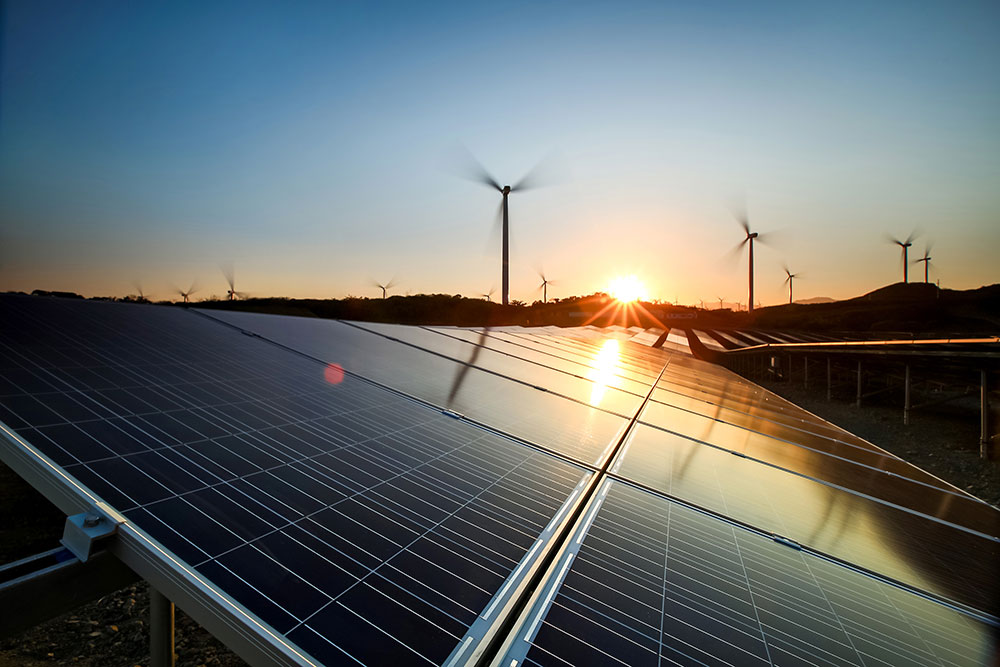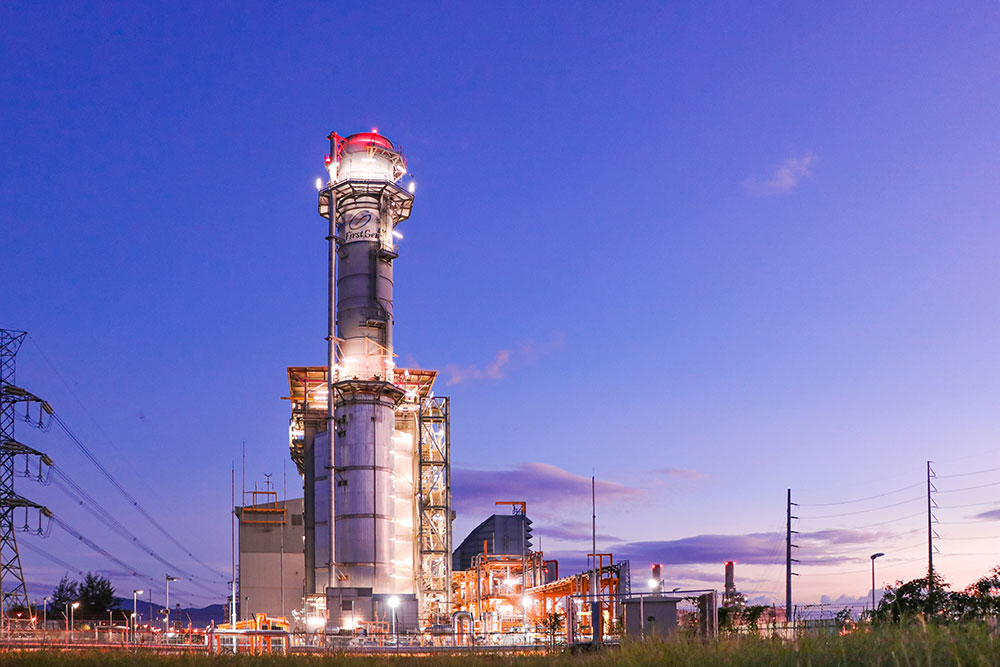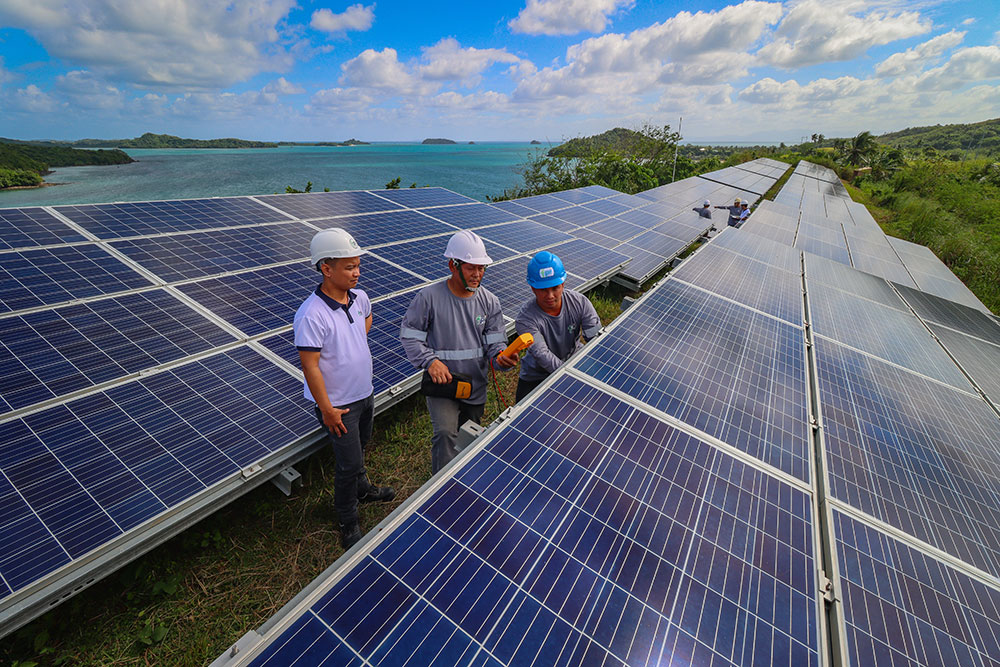
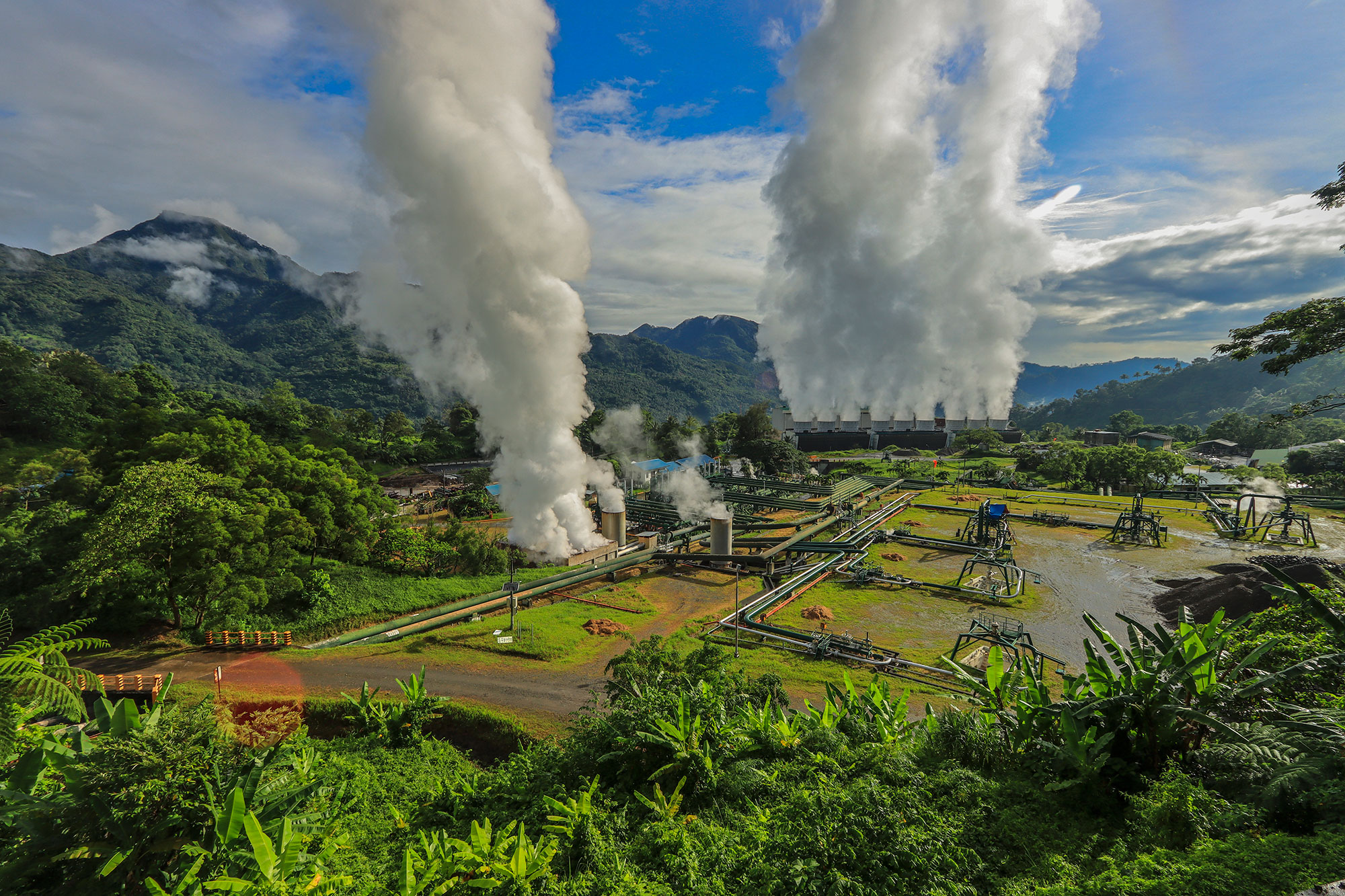
Natural Capital is defined as all the renewable and non-renewable environmental resources and processes that provide goods and services to an organization.22 This includes resources in the form of raw materials, water, land, and air; and includes biodiversity and ecosystem health and services.
The following section presents the natural resources and ecosystem services we use in the production and provision of our businesses’ goods and services, as well as how we, in turn, manage these resources and the environment they come from. This section also presents the metrics we use to monitor our environment-related material ESG topics, and discuss the performance of our business within these areas.
For more details on our approach to managing our natural capital, please refer to Annex 3 of our 2020 Integrated Report, available on our website at https://www.fphc.com.
Energy Management
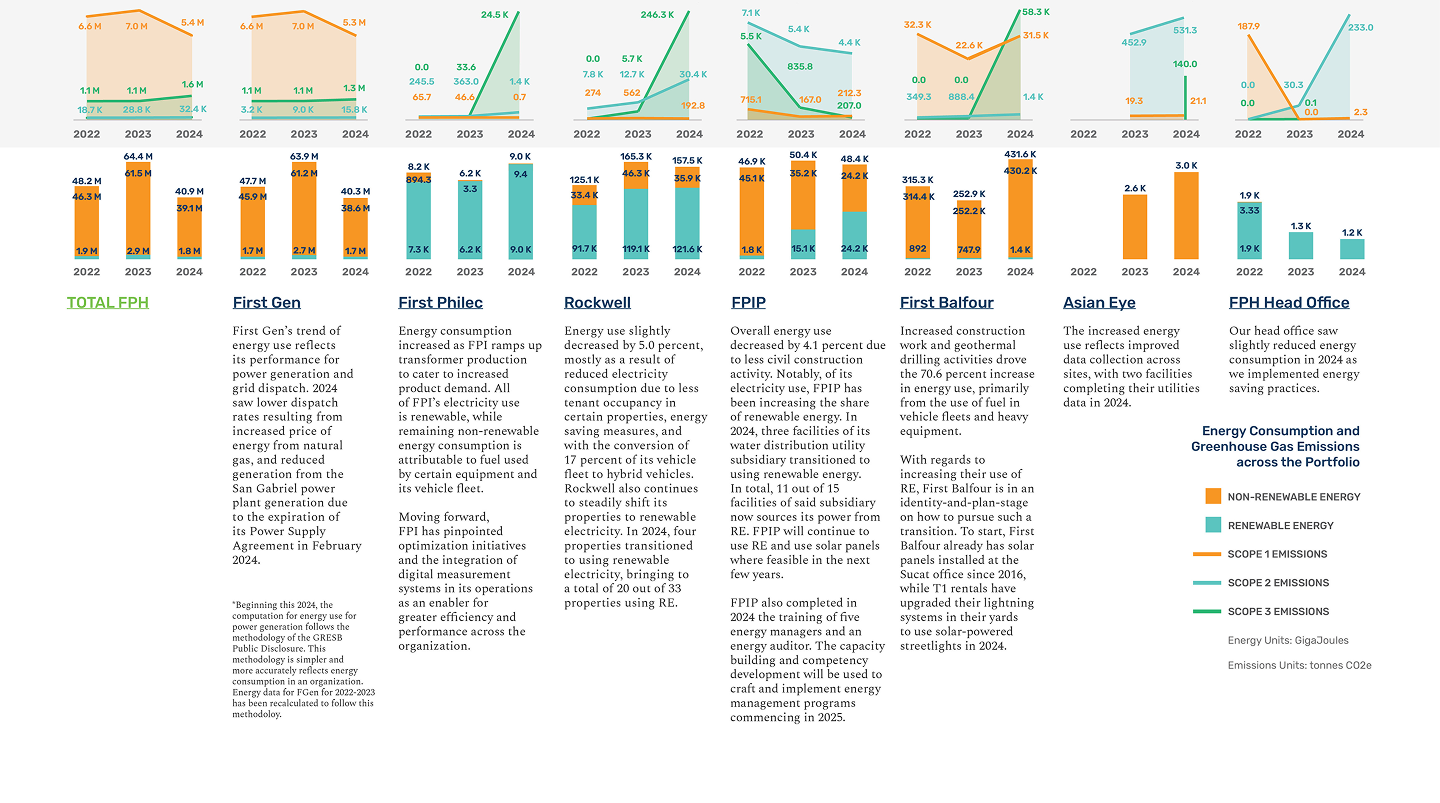
Overall energy consumption across the portfolio declined in 2024. This was primarily due to the dip in the energy generation (related to power plant houseload consumption) of First Gen as the natural gas plants had reduced energy dispatches. Of the non-power subsidiaries, First Balfour and First Philec, had increased energy use related to an uptick of operations. Both Rockwell Land and FPIP had slight decreases in energy use due to less consumption of fuel, and continued increases in the renewable energy (RE) share of their total energy consumption.
Greenhouse Gas Emissions
The greenhouse gas (GHG) emissions of our portfolio, specifically scopes 1 and 2, closely track the energy use of our businesses. The trends in these scopes over the years align with the trends in fuel consumption, as is influenced by the level of business operation. Most notably, these trends also align with the shift towards increased use of renewable energy.
2022 is the base year for Scopes 1 and 2 emissions as this is the year the FPH businesses adjust to post-pandemic conditions. For Scope 3 on the other hand, 2024 is the base year as we complete our Scope 3 exercise for all our major businesses.
The Scope 3 figures below are preliminary figures for all businesses and will be refined in the next reports. Some figures are underreported as we complete data as this time.
Scope 3 Emissions Inventory
Following the capability-building session conducted in 2023 on Scope 3 emissions, we present updated estimates of Scope 3 emissions across the portfolio in 2024. Conclusions from our first exercise to account for the portfolio’s emissions are as follows:
► Our portfolio’s Scope 3 emissions is driven by that of our energy generation company, whose Scope 3 emissions are dominantly from upstream fuel and energy-related emissions (category 3).
► The second and third largest sources of Scope 3 emissions across the portfolio are from purchased goods and services (category 1) and capital goods (category 2) respectively. This is primarily driven by the power generation segment due to its scale compared to the other business units, but within each business segment category 1 and 2 emissions also present the largest source of Scope 3 emissions.
The scope 3 emissions inventory across the portfolio will continue to evolve in the next few years as we refine the methodology, scope, and attain better data collection processes.
Scope 3 Emissions Inventory
First Gen Methane Fugitive Emission Management Program
Overall energy consumption across the portfolio declined in 2024. This was primarily due to the dip in the energy generation (related to power plant houseload consumption) of First Gen as the natural gas plants had reduced energy dispatches. Of the non-power subsidiaries, First Balfour and First Philec, had increased energy use related to an uptick of operations. Both Rockwell Land and FPIP had slight decreases in energy use due to less consumption of fuel, and continued increases in the renewable energy (RE) share of their total energy consumption.
First Gen’s total fugitive methane emission in 2024 was equivalent to 1.75tCO2e, a deep decline from its methane emissions of 170 tCO CO2e in 2023 after the company completed immediate corrective maintenance activities to address the leaks.
First Gen GHG Intensity Reduction
First Gen’s Gas Business Unit actively monitors emerging decarbonization technologies that may contribute to achieving net zero emissions by 2050. The team is continuously evaluating advancements in carbon capture and exploring the potential of hydrogen as a cleaner energy source. Its renewable energy subsidiary, the Energy Development Corporation (EDC), has also developed targets by adapting the methodology of the Science-Based Targets Initiative (SBTi) following a 1.5 degrees Celsius pathway.
By 2040, EDC aims to achieve net-zero emissions with a target of 0kg CO₂/kWh. By 2030, EDC aims to reduce its GHG intensity to 0.1kg CO₂/kWh. These targets demonstrate the company’s commitment to reducing its carbon footprint and aligning with global climate goals.
For more information on the energy intensities of its energy products, these metrics are available in First Gen’s 2024 Integrated Report.
Real Estate’s Transition to Renewable Energy
Among our portfolio, the real estate segment posted significant reductions in their emissions resulting from continued efforts to transition their facilities to procuring renewable electricity, installing solar panels, and shifting to using hybrid or electric vehicles.
Of the real estate segment’s total electricity consumption of 205,882.0MWh in 2024, 70.8 percent comes from the above-mentioned renewable energy sources.
First Philec Near Complete Electrification
In 2024, FPI implemented two key initiatives to reduce emissions: the continuous adoption of renewable energy across their facilities and production operations, and the complete transition to electric vehicle material handling equipment. The latter significantly reduced fuel and gasoline consumption in transformer production. Of FPI’s total scope 1 and 2 emissions of 273.0tCO2e, only 0.7tCO2e is attributed to fuel consumption (scope 1) while the rest are from emissions related to electricity use.
First Balfour GHG Reduction Initiatives
Similar to FPIP, First Balfour has ongoing initiatives to reduce emissions, including solar panel rooftop extensions and the use of electric buses in its projects. First Balfour is also active in bringing down the practice of measuring emissions to its suppliers through its Vendors Forum. The latter activity will help First Balfour better understand its Scope 3 emissions.

FPIP’s Progress Towards Decarbonization
In addition to its ongoing activities to electrify and shift to renewable energy, FPIP is exploring other avenues to decarbonize its operations. This includes exploring how to increase their waste diversion rates and tree planting initiatives. In 2024, the following were accomplished under FPIP’s decarbonization program:
► Increased its renewable electricity in the power mix
► Acquired 5 electric vehicles, reducing emissions by 7.5tCO2e per year
► Planted more trees within the park, with now about 19,000 trees sequestering around 100 tCO2e per year
► Training of personnel in energy management
► Construction of a new Materials Recovery Facility to better divert waste from landfills and reduce emissions from waste
FPIP’s Progress Towards Decarbonization
The Net Zero Carbon Alliance (NZCA), founded by EDC, is leading the advocacy towards decarbonization within the nation’s business sector. NZCA’s mission is to empower Filipino companies to achieve net-zero emissions by 2050, providing them with the tools and expertise derived from EDC’s deep decarbonization experience.
In 2024, NZCA broadened its reach, welcoming 13 new partners and solidifying its strategic direction. Notable achievements included active engagement at regional forums, strengthened partnerships with key stakeholders, and the launch of the Net Zero Stages framework. The successful inaugural Philippine Net Zero Conference celebrated NZCA’s third year. This collaborative effort has produced measurable results, with partners demonstrating significant emissions reductions and increased adoption of renewable energy. NZCA continues to enable the private sector to play a crucial role in achieving the Philippines’ goals in addressing climate change.
Other Air Pollutants
In addition to GHGs, other businesses in our portfolio may generate other air emissions specific to their operations. These include carbon monoxide, nitrogen oxides, sulfur oxides, and suspended particulate matter. Most of these are emitted by the natural gas power plants, followed by the generator sets of the geothermal drilling arm of First Balfour, ThermaPrime Drilling Corporation.
All sources of air emissions are monitored and emission concentrations remain within the allowable limits prescribed by the national government. More details on these metrics for the power generation businesses are available in the First Gen 2024 Integrated Report. Details of air emissions by weight are available in Annex 8.
Material Use
Of our portfolio businesses, the key subsidiaries wherein material use is a key metric are the real estate and manufacturing and energy solutions segments. This is primarily because materials are directly incorporated into their products and offerings.
The use cement in residential and commercial real estate has increased considerably, due to the fact that seven properties were under construction in 2024, compared to six properties in 2023.
In the industrial real estate segment, the use of construction materials declined in 2024 as there were fewer structure- and design-related construction activities. Most of the activity in this area during the year focused on maintenance and electrical work.
With the manufacturing business segment, the increase in demand for transformers directed the increase in materials consumption for 2024.
Other business segments (notably the energy segment) saw an uptick in material use, which is directly influenced by the level of operations activity. In 2024, this was influenced by EDC’s drilling operations program to drill new geothermal wells and maintain old wells for efficient steam output.
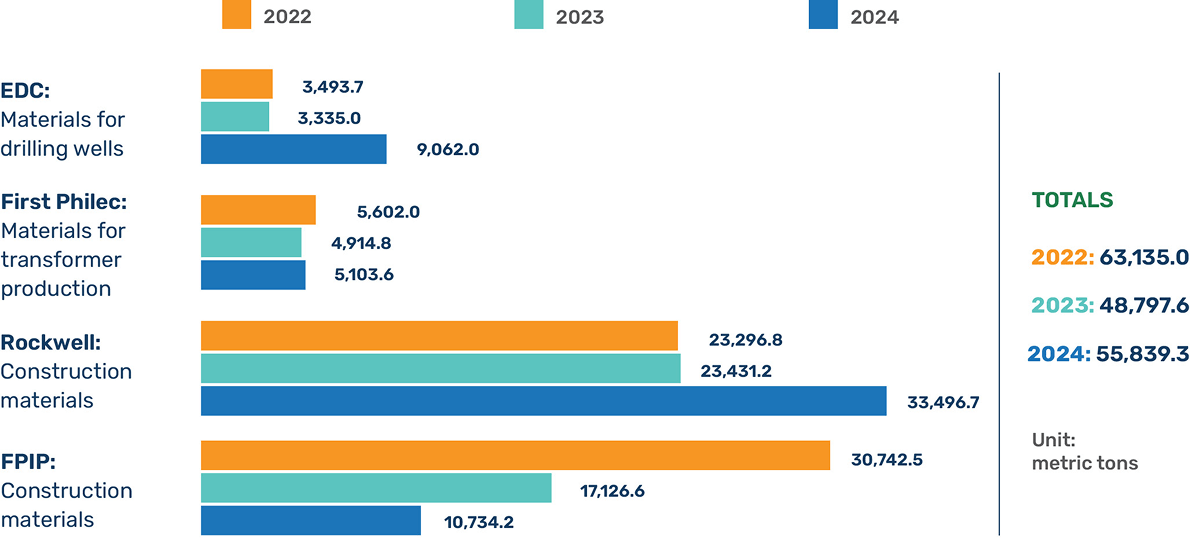
Data for materials used in this report has been modified from previous reports. Water as a material used by hydroelectric power plants will no longer be categorized as a material, as it is already counted under the “Water Use” metric where it is more relevant. Likewise, steam as a material used by geothermal power plants will no longer be included here. Energy produced from steam is already counted under the “Energy Consumption” metrics. Fuel use for all subsidiaries where fuel is a key component of products or services will no longer be categorized as a material, as it is already counted under the “Energy Consumption” metric, where it is more relevant.
Waste Management
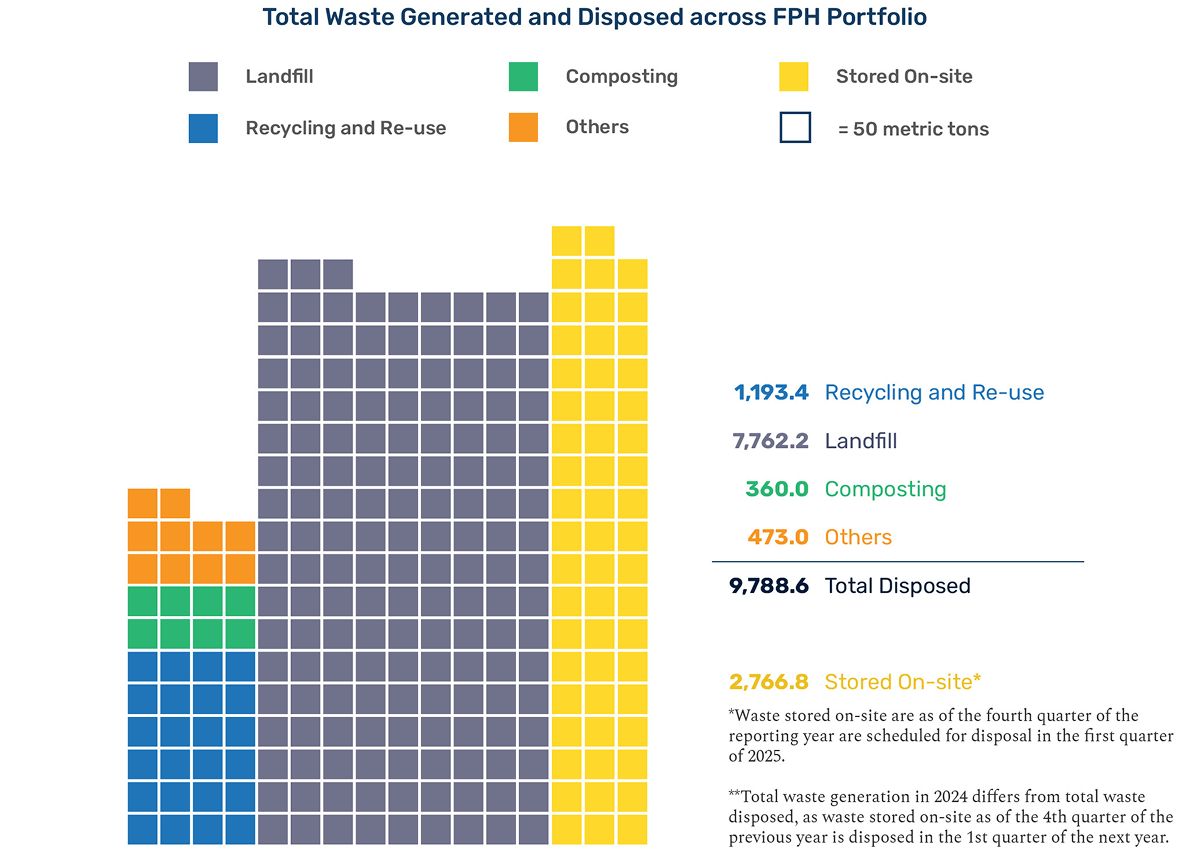
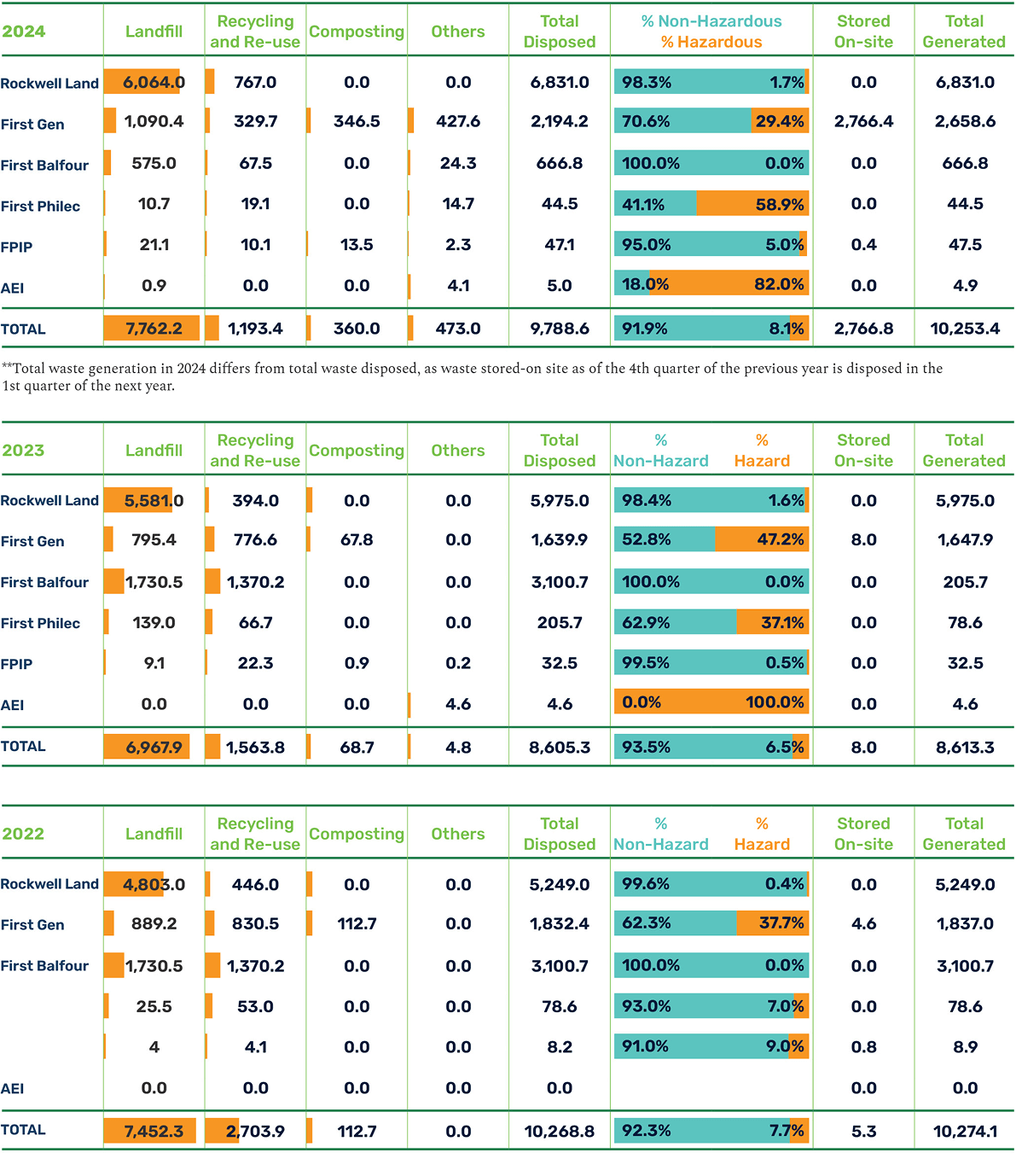
The waste managed by our portfolio companies is driven by our residential and commercial business as Rockwell manages the waste of its retail tenants and unit owners in the properties they manage. Their overall waste disposed increased by 14.3 percent, with a general increase across most properties. A considerable part of the waste was due from construction, such as that of Aruga Mactan. Other properties post an increase in waste due to either tenants moving in newly constructed properties, or increased tenant activity.
In our power generation segment, waste consumption increased significantly. This increase was brought about by significant maintenance activities in the natural gas and geothermal power plants and the extensive drilling of geothermal wells under EDC’s Drilling Operations Program (DOP). The DOP activities in 2024 focus on making up for delays in well maintenance and optimization activities that transpired during the COVID-19 pandemic.
Additionally, several growth projects in EDC (such as the construction of the battery storage systems) have contributed to the increase in waste generation, along with the acquisition and full operation of the Casecnan hydropower plant.
Asian Eye has a notable increase in waste recorded. This is due to improvements in data collection processes in satellite clinics. First Balfour on the other hand, posted a decrease in waste generated.
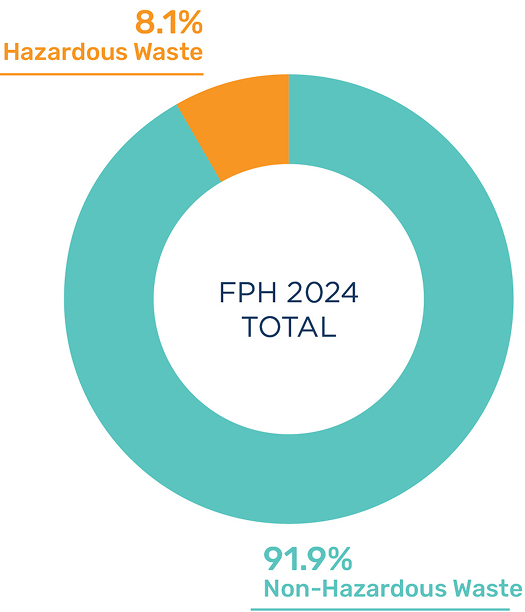
Majority of waste generated across the portfolio are non-hazardous in nature, predominantly as municipal waste. The subsidiaries with a significant portion of hazardous waste are First Gen and Asian Eye. First Gen’s hazardous waste is composed of waste oil and waste chemicals from their laboratories and geothermal drilling, while Asian Eye’s hazardous waste is composed of pathological waste from their surgical centers and clinics. All hazardous waste is appropriately treated by the respective subsidiary’s DENR-accredited waste haulers prior to disposal.
Water Use and Wastewater Management
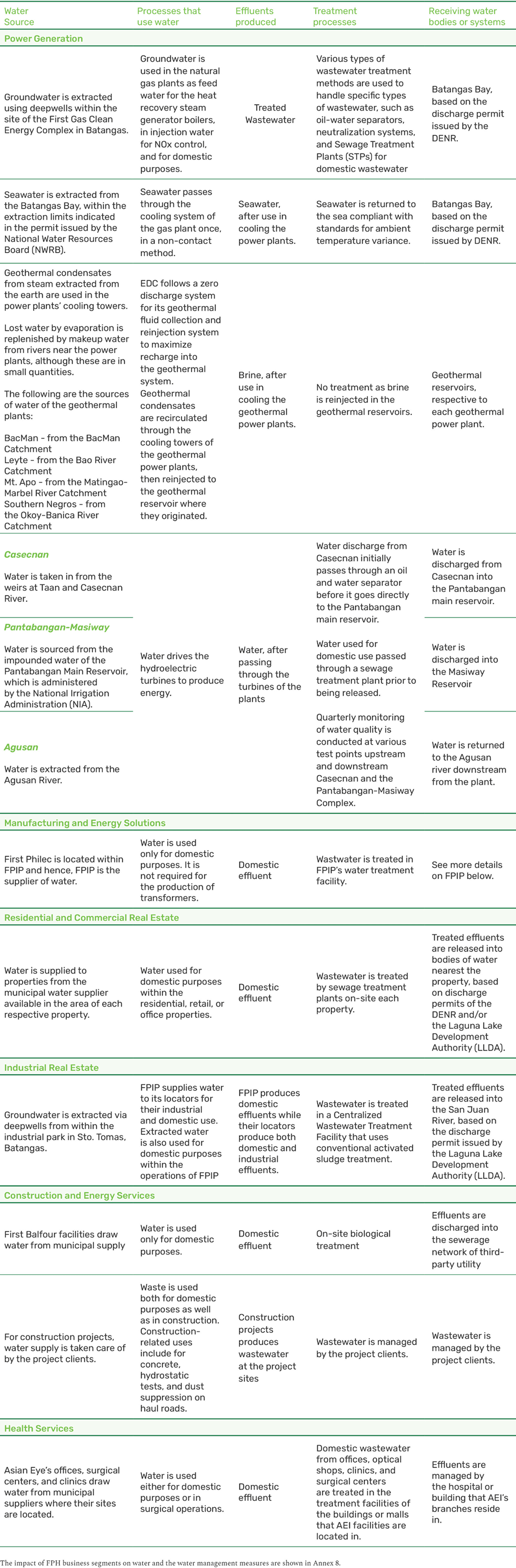
All our businesses comply with the national and local regulations for wastewater treatment before its release to the appropriate receiving systems or bodies of water. All our offices produce domestic wastewater which is collected and treated in the wastewater systems in their respective properties. In our real estate businesses, each property has its own wastewater management system that treats the wastewater before releasing the effluents into the nearest body of water, in compliance with the water quality requirements of national and/or local regulations. For our construction and energy services segment, wastewater from construction and drilling activities are managed by their clients.
The following presents the details on where water is extracted, how water is used, the treatment process of effluents by each of our subsidiaries, and the receiving water bodies or systems of the treated effluents. FPH does not yet have any water-related targets at this time.
Water Use
Biodiversity
FPH and its subsidiaries rely heavily on nature as the source of raw materials and for ecosystem services that can provide physical protection. Protecting nature enables continued business operations, improves the well-being of our host communities, and contributes to the economy in the areas where we operate. This is central to the FPH mission of regeneration.
In this area, we consider two indicators of nature’s health: a) the structural integrity of the ecosystem, as in the dynamics between flora and fauna and its physical environment which allows the ecosystem to continue to thrive; and b) biodiversity of organisms which maintains the quality, quantity, and resilience of ecosystems and ecosystem services. FPH supports the goal of the United Nations Convention on Biological Diversity (CBD) to halt, prevent, and reverse ecosystem degradation, and to restore degraded lands and water habitats in our worksites and areas of influence.23
In analyzing the interactions between our businesses and nature, we reference the disclosures of GRI 304 (Biodiversity 2016) and the guidelines of the Task Force on Nature-related Financial Disclosures.24
Guiding Principles on Protecting Habitat and Diversity
Our Management Approach to Environmental Performance was declared in FPH’s maiden Sustainability Report in 2016 which establishes our commitment to environmental protection. It highlights:
how to increase their waste diversion rates and tree planting initiatives. In 2024, the following were accomplished under FPIP’s decarbonization program:► the application of the management approach to all FPH units;
► protecting affected communities;
► preserving and enhancing the environment;
► adoption of the “Mitigation Hierarchy” principle of avoidance, minimization, restoration, and offsetting to compensate adverse impacts; and
► establishment of an Environmental, Safety and Health Management System aligned with the Philippine Environment Impact Assessment System.
Operational Sites Within or Close to Areas of High Biodiversity Value
All of our non-power generation subsidiaries operate in urban or intensively used areas, far from the lands’ original, natural state. The exception to this is our construction and energy services subsidiary First Balfour, which operates within the areas of EDC.
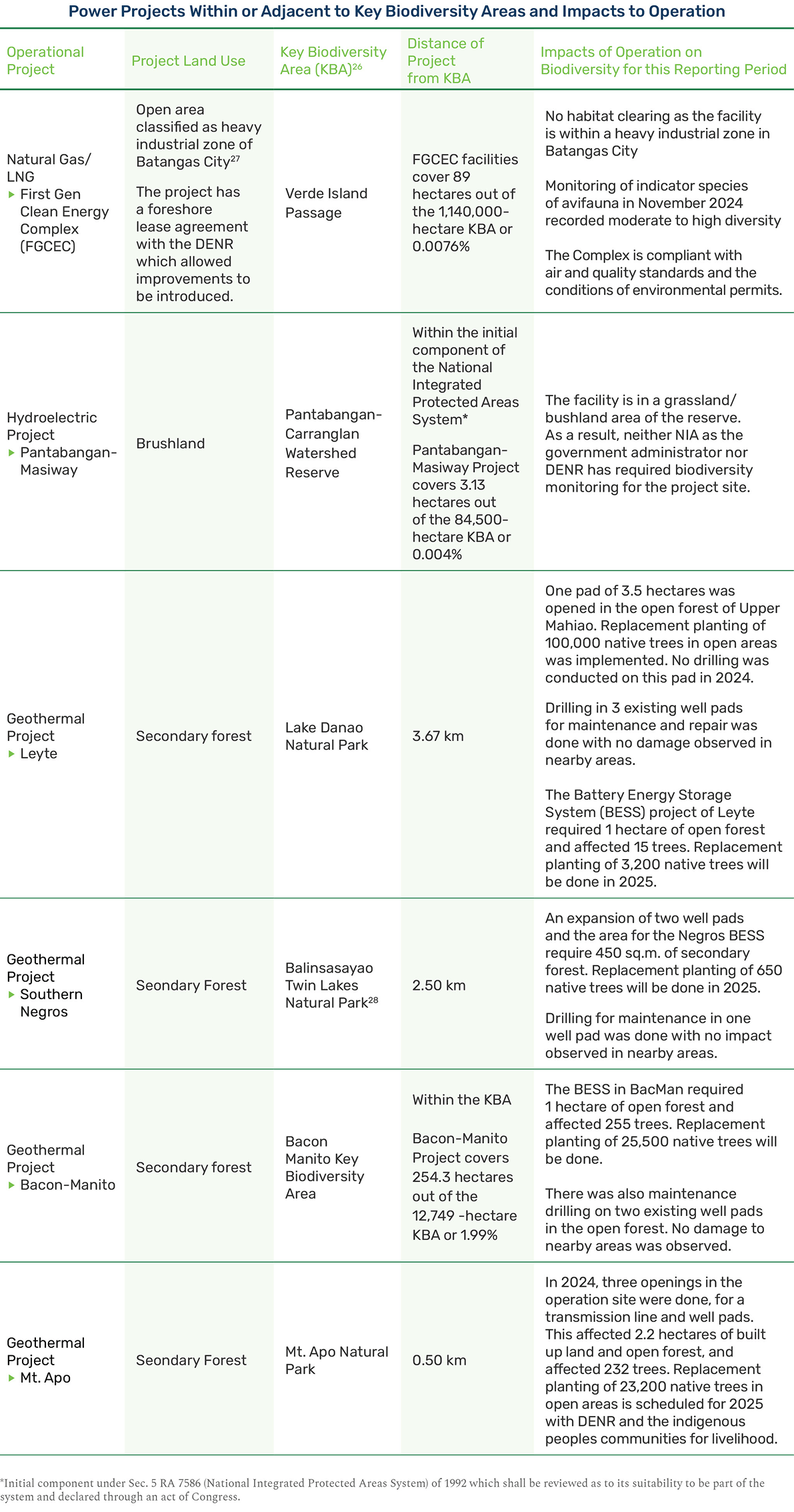
With our power generation subsidiaries, some operational sites are within or close to areas of biodiversity. The DENR Memorandum Order 2023-04 defines that projects within three kilometers of protected areas and declared Ramsar Sites (protected wetland) will require a more stringent technical assessment on top of an Environmental Impact Assessment.25 Based on this criterion, below are the projects of our power generation subsidiaries within or near Key Biodiversity Areas (KBAs). All sites of operation comply with regulations for air and quality standards, as well as the conditions of environmental permits with the DENR.
Management of Biodiversity Impacts and Measures
The main impacts of our power projects to biodiversity is on habitat conversion through civil works and the potential impacts to air and water during regular operations. All the identified projects inside or near KBAs were compliant with their environmental permits with DENR, resulting in no violation in 2024.
To minimize the impacts of the identified projects on biodiversity and to enhance their habitats, the FPH power companies comply with the watershed or marine management plan of the KBA where their sites are either located or adjacent to. The compliance of the projects with their environmental permits were monitored by a Multipartite Team composed of the DENR, local government unit, and the host community of the respective projects. In addition, biodiversity monitoring was conducted by third party experts. Below are the environmental management activities of these projects in 2024.
Pantabangan-Masiway Hydro Project
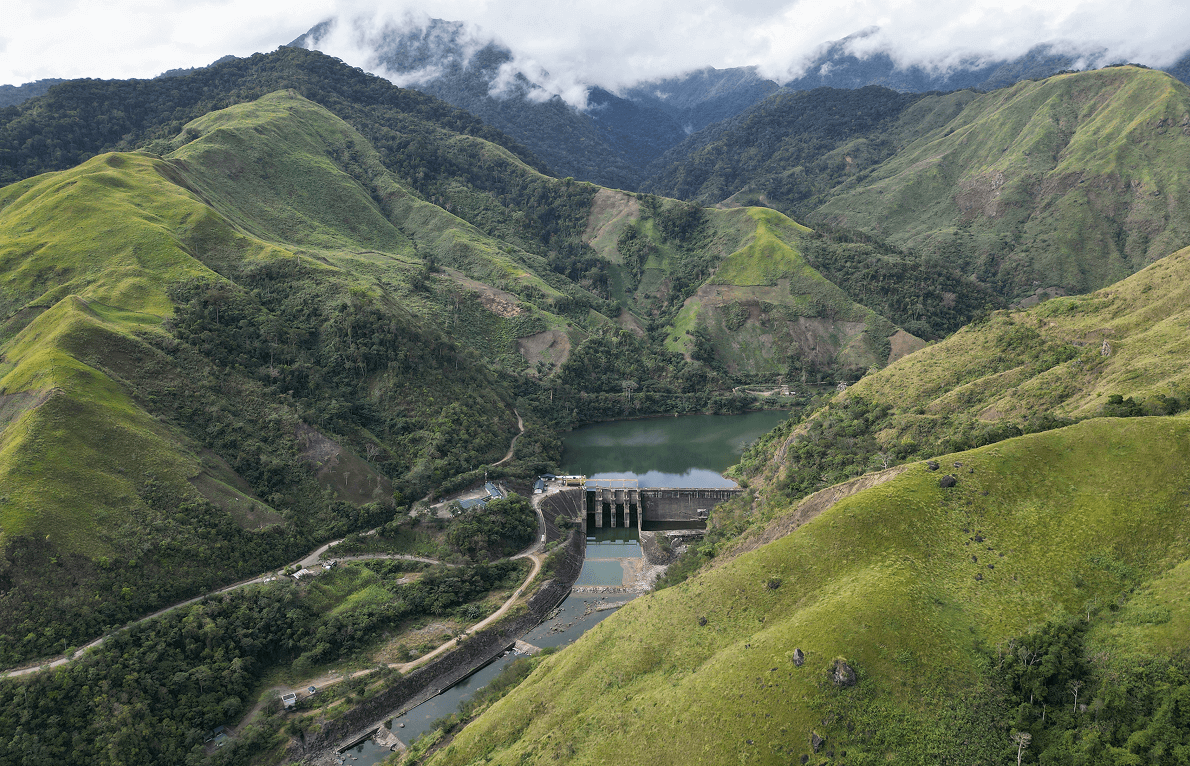
First Gen’s Pantabangan-Masiway hydropower project is located in the Pantabangan-Carranglan Watershed Reserve, which is under administration by the NIA. As an initial component of the National Integrated Protected Areas System (NIPAS) and pending the finalization of its status as a protected area under RA 7586, First Gen (as the project operator) has partnered with NIA since 2009 to protect and conserve the area.
2024 Accomplishments:
► Protected an adopted 1,209-hectare plantation
► Maintained 90 hectares of reforested area
► Established 50 hectares of new reforestation area
► Conducted enrichment planting of 53 hectares of reserve area
► Published a field guidebook titled “A Guide to Trees and Shrubs of Pantabangan” in partnership with Institute of Biology, University of the Philippines Diliman. The guidebook was turned over to DENR-PENR, CENR and to the PAMB (Protected Area Management Board of the Pantabangan-Carranglan Watershed Forest Reserve) for their biodiversity monitoring activities.
First Gas Clean Energy Complex (FGCEC)
FGCEC (which houses the natural gas projects of First Gen) is located in the Verde Island Passage. This area is under the administration of the Department of Environment and Natural Resources (DENR) in coordination with Marine Protected Area Network, a group of marine protected areas collaborating on their protection efforts.

2024 Accomplishments:
► Planted 900 mangrove seedlings
► Maintained a 10.6-hectare mangrove restoration area.
► Generated 289 terrestrial forest seedlings and 3,100 mangrove seedlings that were dispersed to government and non-government organizations.
► Continued biannual monitoring of mangrove stands within the site for biodiversity and habitat protection. In October 2024, severe tropical storm Kristine (international name Trami) significantly impacted the mangrove stands and its biodiversity.
► Monitoring of mangrove stands after severe tropical storm Kristine (International Name, Trami) in Oct 2024 to inform the reforestation activities.
► Monitoring of mangrove stands after severe tropical storm Kristine (International Name, Trami) in Oct 2024 to inform the reforestation activities.
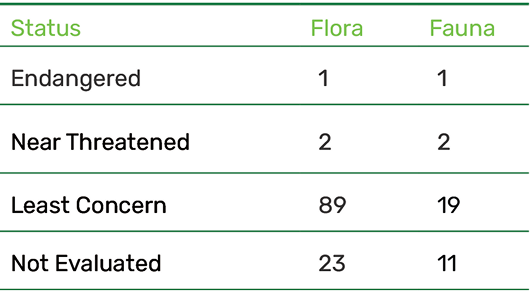
► First Gen has recorded the following IUCN Red List species within the site:
Protection activities on Verde Island Passage in 2024 consisted of the following:
► The 389 Batangas Bantay Dagat (sea patrol) members were provided with life and accident insurance.
► Assistance was provided to 387 sea patrollers affected by severe tropical storm Kristine of October 2024.
► The company supports the annual Seasonal Fishing Closure of Batangas province on the implementation of RA 10654 and strict banning on the use of fine mesh nets. The activity is an inter-local government initiative for fisheries management which is an adaptation effort to enhance coastal protection and to strengthen fisheries resilience.
► The company continues to be a technical partner of the Batangas Marine Protected Area and Bantay Dagat Network. It supported the preparation of the network’s Strategic Management Plan which was approved by the Batangas Provincial Council in 2024.
Geothermal Reservations
In 2007, EDC was deputized by the government corporation, Philippine National Oil Company (PNOC) to manage the watersheds of its geothermal reservations in Leyte, Southern Negros, Bacon-Manito, and Mindanao. Their watershed management plans are compliant with Executive Order 223 of 1987 guided by the Forestry Reform Code of the Philippines (Presidential Decree 705). EDC’s watershed management program consists of forest protection, forest restoration, and biodiversity conservation.
2024 Accomplishments:
► Forest Protection
- ► Three forestry violations were recorded in Leyte
- ► 32 forest fire incidents were recorded in Southern Negros during the dry season started by slash and burn farmers but were suppressed by EDC forest guards and response teams from the community
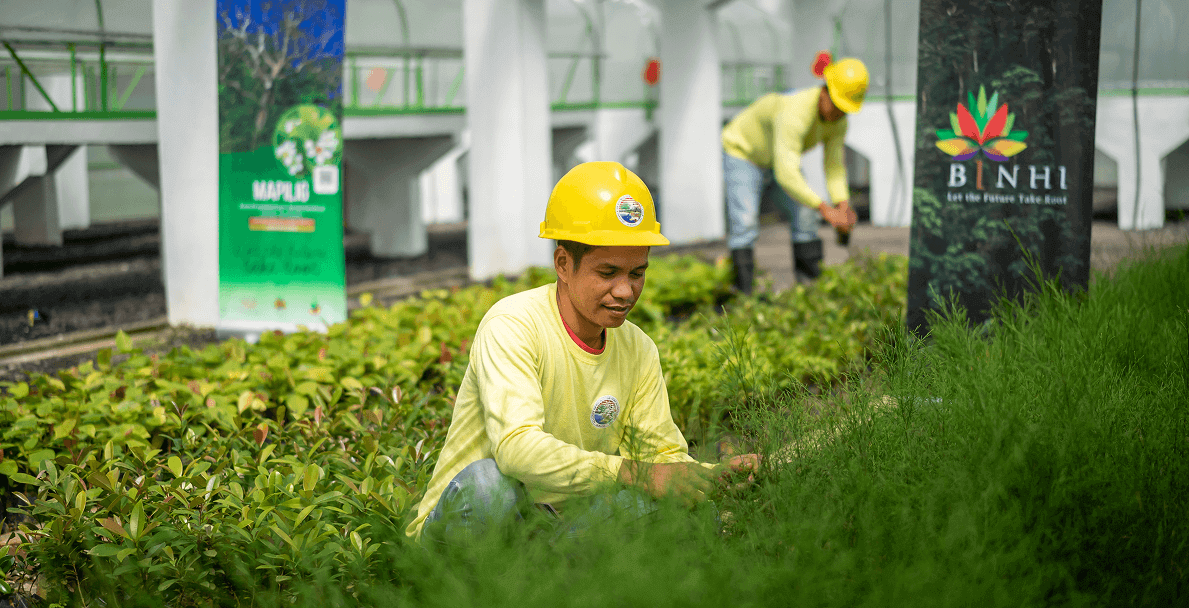
► BINHI Forest Restoration
- ► A total of 100 hectares were reforested in Bacon-Manito
- ► A total of 171,892 native seedlings produced from Vegetative Material Recovery nurseries:
- • Bacon-Manito : 21,315
- • Southern Negros : 268,056
- • Leyte : 5,090
- • Mt. Apo : 60,016
- • Burgos : 3,500
- • Head Office : 10,605
- • Lobo : 3,310
►
Biodiversity Monitoring
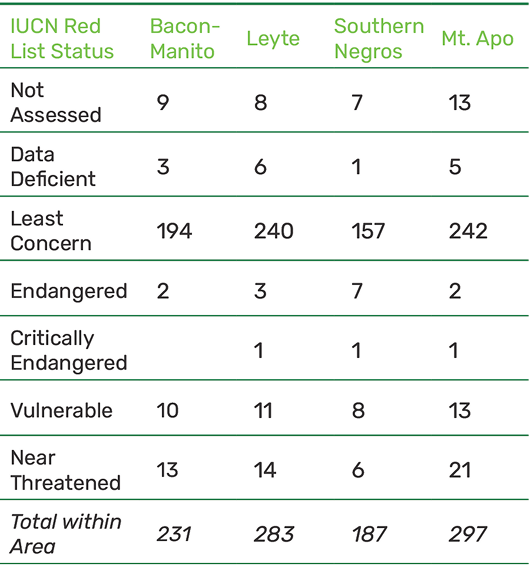
The biodiversity of fauna is an important metric monitored in the geothermal reservations. The following are current records faunal biodiversity:
►
Mainstreaming Philippine Native Trees
As part of its conservation efforts, EDC also partners with various institutions in the preservation and propagation of threatened species, as well as to educate.
In 2024, EDC has:
- ► Maintained 6 Vegetative Material Recovery nurseries
- ► Safeguarding and propagating 145 native species
- ► Seven new arboreta were established in partnership with various BINHI partners. These new arboreta are located at the:
- • University of the Philippines Open University, Los Baños, Laguna;
- • Eastern Visayas State University, Burauen, Leyte;
- • Silliman University, Dumaguete City, Negros Oriental;
- • Cavite State University, Indang, Cavite;
- • Far Eastern University, Silang, Cavite;
- • Barangy Olympog, General Santos City, South Cotabato; and
- • AFOCO Bacon-Manito Arboretum, Manito, Albay.
This brings EDC and its BINHI partners to a total of 48 arboreta, with one more in development.
- ► EDC continues to be the partner of the International Union for the Conservation of Nature (IUCN) for its Global Tree Assessment. To date, EDC has completed the review of 1,410 Philippine endemic trees. In 2024, an additional 317 species were published in the IUCN Red List website. A total of 49 newly assessed species were added to EDC’s priority list for protection.
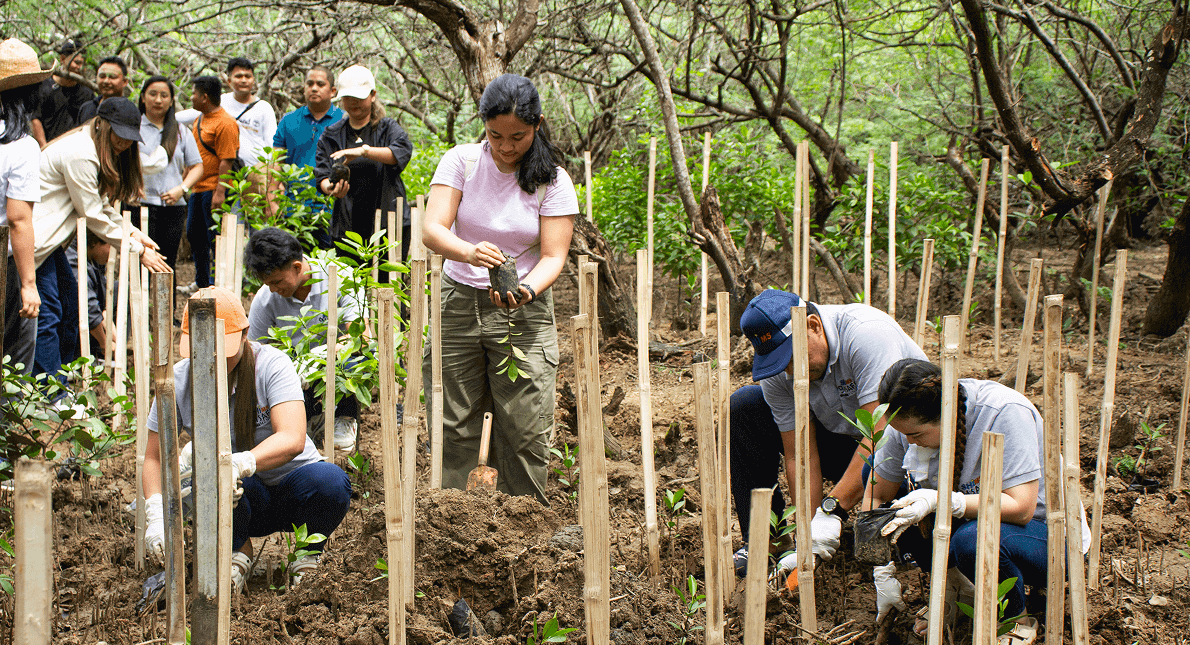
- ► A total of 1,600 volunteers joined the CommuniTree program planting 2,643 native trees across the country. Another 5,000 trees were planted by First Philec, a sister subsidiary of EDC.
- ► Conducted 14 information drives on environmental conservation.
Other Activities Of The Non-Power Generation Business
Despite the non-power generation businesses being situated in urban areas, there are still many activities by our businesses to build up natural capital and contribute to the restoration of nature. The following are their activities for 2024:
► First Balfour engaged in several coastal clean-up activities, collecting a total of 643kg of waste from beaches and wetland parks. First Balfour also had several tree planting initiatives on Arbor These activities aimed to support ecosystem restoration and conservation, with positive outcomes such as reduced waste in coastal areas and increased green cover through reforestation.
► First Philec joined the Communi-Tree Program of EDC-BINHI, which focuses on environmental regeneration through reforestation. FPI also adopted a forest in Lobo, Batangas, wherein they planted 1,000 saplings of Philippine Teak, a critically endangered species endemic to the region.
► FPIP has an annual tree planting activity. It planted 3,590 saplings in 2024.
► Rockwell donated trees to AIPI. They are also in ongoing discussions with Masungi Georeserve Hiding on preservation efforts. Rockwell has also partnered with Smart Recycle and Black Soldier Fly Larvae Technology to help with waste recycling efforts.
Summary
► Energy consumption across the portfolio declined, primarily as a result of less power generated by the power businesses. The real estate segment continues to shift its electricity use to renewable sources.
► Overall emissions across the portfolio decreased, following the trend of having less energy produced and dispatched by the power generation segment. Records of scope 3 emissions increased due with better processes to account for Scope 3 emissions. This will help the portfolio begin to assess Scope 3 emissions for GHG reduction activities.
► Material use increased with the increase in the number of properties being constructed in the residential and commercial real estate segments.
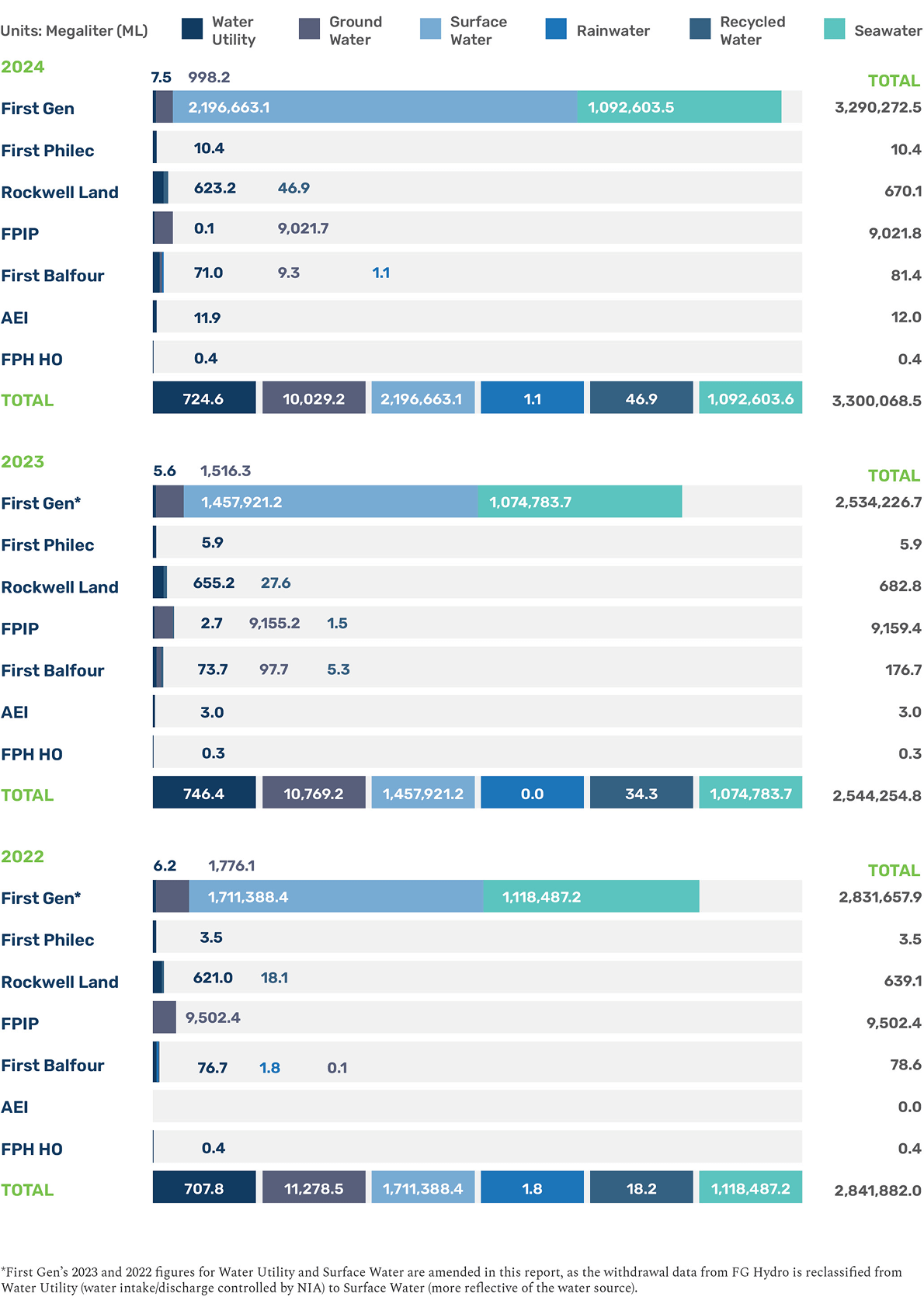
► Water use across the portfolio increased due to the Casecnan hydro power plant beginning operations. Whereas for the non-power generation subsidiaries, water use only increased slightly due to increased activity in operations.
► Waste disposed across the portfolio increased, primarily driven by the level of activity in the residential and commercial property segment. The energy segment also disposed of more waste due to major maintenance activities conducted in 2024.
► Management of biodiversity and related impacts in relevant sites was maintained.
Financial Outcome
► Programs and activities under Natural Capital require financial resources, particularly with due diligence in operations, abiding by regulatory requirements, and investments in the areas of greenhouse gas reduction programs, energy efficiency and management, and water management-related programs of relevant subsidiaries.
Non-Financial Outcome
► With the overall decrease in energy consumption and GHG emissions, natural capital in general was preserved. Water use may have increased, but this was due to the operations of the Casecnan hydro power plant wherein water merely passes through the turbine and is not consumed, per se.
► Natural capital under the theme of biodiversity and conservation slightly increased with the activities under the BINHI program and nature conservation and restoration activities across the portfolio.
22
IFRS Foundation (2021). International
23 Convention on Biological Diversity (2022). Decision Adopted by the Conference of Parties to the Convention on Biological Diversity. Retrieved from https://www.cbd.int/doc/decisions/cop-15/cop-15-dec-04-en.pdf
24 GRI (2024). GRI and TFND make reporting on biodiversity easier. Retrieved from https://www.globalreporting.org/news/news-center/gri-and-tnfd-make-reporting-on-biodiversity-easier/
25 DENR (2023). Amending Provisions of DMO 2023-01 or Additional Guidelines for Projects Applying for an Environmental Compliance Certificate (ECC) which are Within or with Close proximity to Protected Areas and RAMSAR Sites. Retrieved from https://eia.emb.gov.ph/wp-content/uploads/2023/12/DMO-2023-04.pdf
26 DENR, Conservation International and Haribon Foundation (2006). Priority Sites for Conservation in the Philippines. Key Biodiversity Areas. Retrieved from https://philchm.ph/wp-content/uploads/2019/02/KBA_Booklet.pdf
27 Comprehensive Zoning Ordinance of Batangas City and the Urban Zoning Map of Batangas City 2015 and Batangas City Integrated Zoning Ordinance 2019. Retrieved from https://www.batangascity.gov.ph/web/images/Offices/LEIPO/Zoning-Ordinance.pdf
28 Republic of the Philippines (2017). Expanded National Protected Areas System Act. Retrieved from https://web.senate.gov.ph/epublic_acts/ra%2011038.pdf